











Frequently Asked Questions
Let our experts at E-ONE help answer some of the frequently asked questions about fire apparatus features and options. Click each section and question below to learn more.
What is a fire apparatus?
Fire apparatus is the broad industry term for a vehicle designed or equipped for fire suppression, rescue, emergency medical response, hazardous materials incidents, command, or other fire-service operations. The term includes pumpers, aerials, tankers, rescues, wildland units, ARFF vehicles, and many specialty vehicles.
What is the difference between a fire engine and a fire truck?
In everyday conversation, the terms are often used interchangeably. Operationally, an engine or pumper is primarily built to move water through a fire pump and hose, while a truck commonly refers to an aerial apparatus that carries ladders, tools, and equipment for access, ventilation, rescue, and elevated master-stream operations. Local terminology varies by department.
Why do firefighters call the vehicle an apparatus?
Apparatus is a collective term that describes the entire purpose-built emergency vehicle, including the chassis, cab, body, pump, aerial device, water or foam systems, tools, and installed equipment. It is more precise than using truck for every type of fire-service vehicle.
Why are most fire trucks red?
Red became a strong fire-service tradition, but there is no universal rule requiring fire apparatus to be red. Departments also use white, black, yellow, lime-yellow, blue, or multi-color designs based on local identity, visibility goals, fleet standards, and tradition.
Do all fire trucks carry water?
No. Pumpers, tankers, many quints, and many wildland units usually carry an onboard water supply, but some aerials, rescues, command units, and specialty vehicles may carry little or no water. The configuration is based on the department's response model and the vehicle's assigned mission.
What is a pumper fire truck?
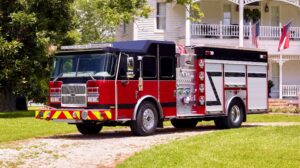
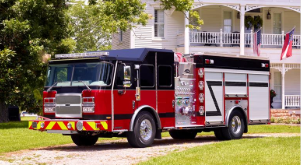
A pumper, also called an engine, is designed primarily to supply and move water for firefighting. It typically includes a fire pump, onboard water tank, hose, ground ladders, tools, and crew seating, with the exact configuration customized to the department.
What is an aerial ladder truck?
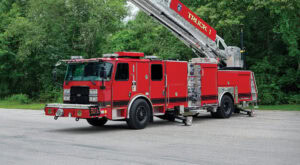
An aerial ladder truck carries a powered ladder that can be raised, rotated, and extended for elevated access, rescue, ventilation, and water application. Some aerial ladders include a pump and tank, while others are designed primarily as ladder or truck-company apparatus.
What is an aerial platform or tower ladder?
An aerial platform places a work platform or basket at the end of the aerial device. It can provide a guarded working area for firefighters, rescue occupants from elevated locations, and support an elevated master stream. Platform size, rated capacity, reach, and waterway flow vary by model.
What is a quint fire truck?
Quint means the apparatus provides five traditional functions: a fire pump, an onboard water tank, fire hose, an aerial device, and ground ladders. A quint can combine engine-company and truck-company capabilities, although staffing and operating procedures determine how those capabilities are used at an incident.
What is a tractor-drawn aerial or tiller truck?
A tractor-drawn aerial, commonly called a TDA or tiller, uses a tractor and a long trailer carrying the aerial ladder. A second driver, the tiller operator, steers the rear of the trailer, which can improve maneuverability on tight urban streets. Many TDAs also provide extensive ground-ladder and equipment storage.
What is a rescue pumper?
A rescue pumper combines the water, pump, and hose functions of an engine with expanded compartment space for rescue, EMS, extrication, or specialty equipment. It is often selected by departments that want one first-out apparatus to cover a broad range of calls.
What is a heavy rescue truck?
A heavy rescue is built to carry and operate large amounts of rescue equipment for vehicle extrication, technical rescue, collapse, confined-space, rope, trench, water, or other specialized incidents. Some heavy rescues include a fire pump, water tank, breathing-air system, generator, crane, or command area, while others do not.
What is a tanker or tender fire truck?
A tanker or water tender is designed to transport a large supply of water, especially where hydrants are limited or unavailable. These vehicles may include large dump valves, portable tanks, direct tank-fill systems, and a fire pump sized for transfer, nurse-tanker, or attack operations.
What is a wildland fire truck?
A wildland apparatus is designed for vegetation fires and off-road or rough-road response. It is generally more compact and mobile than structural apparatus and may include four-wheel drive, higher ground clearance, a smaller tank and pump, hose reels, forestry hose, and pump-and-roll capability.
What is an ARFF fire truck?
ARFF stands for Aircraft Rescue and Fire Fighting. ARFF vehicles are designed for airport emergencies and emphasize rapid acceleration, off-pavement mobility, large agent capacity, high-output turrets, foam application, and specialized rescue or aircraft-penetration equipment based on airport requirements.
What does GPM mean on a fire truck?
GPM means gallons per minute. It describes a flow rate, such as the amount of water a pump can deliver or a nozzle can discharge. Flow must always be considered together with pressure, hose size, elevation, friction loss, and the available water supply.
What does PSI mean in firefighting?
PSI means pounds per square inch and is a measure of pressure. Pump operators use pressure to overcome friction loss, elevation, appliance loss, and nozzle requirements so the desired flow reaches the end of the hose or aerial waterway.
What does a 1,500-GPM or 2,000-GPM pump rating mean?
The rating identifies the pump's tested capacity under specified conditions and pressures, not a guarantee that every discharge can flow that amount in every situation. Actual performance depends on the water source, intake plumbing, hose and appliance layout, engine power, elevation, and operating conditions.
What is the difference between a single-stage and two-stage fire pump?
A single-stage centrifugal pump uses one impeller to produce fire flow and pressure. A two-stage pump uses two impellers and can be operated to favor volume or pressure. The best choice depends on the department's tactics, maintenance preferences, target flows, and pressure requirements.
What does drafting mean in firefighting?
Drafting means drawing water from a static source, such as a portable tank, pond, cistern, or other non-pressurized supply. Because a centrifugal fire pump does not normally remove air from the intake on its own, the system must be primed and the suction side must remain airtight.
What is a fire pump primer?
A primer removes air from the pump and suction hose so atmospheric pressure can move water from a static source into the pump. Primers may use electric, pneumatic, or other designs, and their condition is important for reliable drafting operations.
What is pump cavitation?
Cavitation occurs when pressure inside the pump becomes low enough for vapor bubbles to form and then collapse. It may sound like gravel moving through the pump and can reduce flow, create vibration, and damage pump components. Operators address it by improving the water supply or reducing pump demand.
What is relay pumping?
Relay pumping uses two or more pumpers positioned along a hose supply line to move water over a long distance. Each apparatus boosts pressure so the required flow reaches the attack pumper without exceeding safe hose or pump operating limits.
FIND A DEALER
Leading the way with advanced engineering and innovative design, E-ONE is an industry leader in product innovations, new technologies and exceeding customer expectations. Search for the E-ONE Dealer closest to you!